Want to save with Paschal? Don’t miss our current offers and specials
Want to save with Paschal? Don’t miss our current offers and specials

Want to save with Paschal? Don’t miss our current offers and specials
Return to Paschal Resource & Education Hub
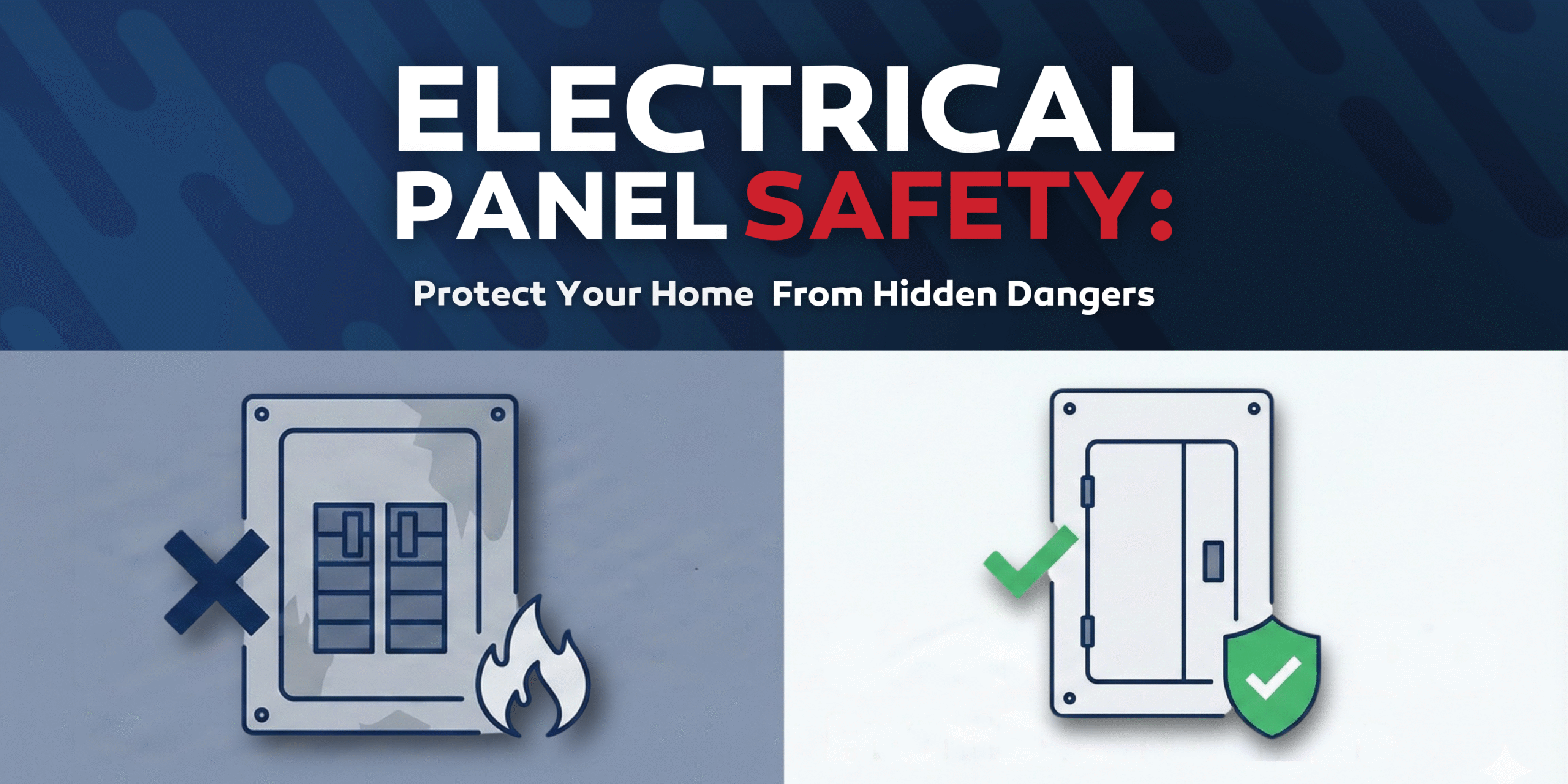
Your home’s electrical panel is the heart of your electrical system. It distributes power to every outlet, light, and appliance in your house. While most modern panels are safe and reliable, some older brands have known design flaws that can cause breakers to fail, overheat, melt, or spark. These issues can lead to fires or electrical shocks, making them serious safety concerns.
Insurance Considerations: Many insurance providers treat older or unsafe panels as a liability. Homes with obsolete breakers or wiring, like Federal Pacific Electric panels or knob-and-tube/aluminum wiring, can face higher premiums, policy denial, or non-renewal due to increased fire risk. Insurers may require a professional inspection or mandate an upgrade to a modern, 200-amp panel to maintain coverage, since damage from age or poor maintenance typically isn’t covered, only sudden events.
If your panel is one of the older, riskier brands, it is critical to recognize the danger and take action with a licensed electrician.
Some panels have repeatedly been flagged by electricians and home inspectors for safety hazards. The most notorious brands include Federal Pacific Electric (FPE) Stab-Lok, Zinsco / GTE-Sylvania, Challenger, and Pushmatic.
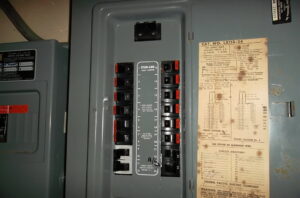
These panels may be labeled as Federal Pacific Electric, Federal Pacific Stab-Lok, or simply Stab-Lok. FPE Stab-Lok panels have a history of breakers that fail to trip during overloads. When a breaker does not trip, wires can overheat, insulation can melt, and fires can start. Over time, connections inside the panel may loosen, increasing the hazard. The Consumer Product Safety Commission has documented these failures, and many licensed electricians recommend full panel replacement rather than repairing individual breakers.
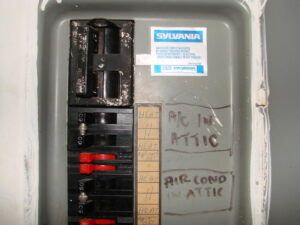
Zinsco panels, sometimes sold under the GTE-Sylvania brand, have breakers that can fuse to the bus bar. When that happens, the breaker may never trip, leaving circuits unprotected. This can cause wires to overheat, insulation to melt, and significantly increase fire risk. InspectAPedia details the hidden dangers of Zinsco panels, and many electricians advise complete replacement.
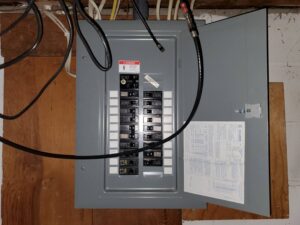
Older Challenger panels, generally manufactured before the 2000s, have documented issues with “backstabbed” wiring and overheating breakers. Backstabbing is a method of connecting wires to the breaker without a screw terminal, which can lead to loose connections. Replacement breakers for these panels can be unreliable, so many professionals recommend replacing the entire panel. Newer Challenger panels appear to be safe.
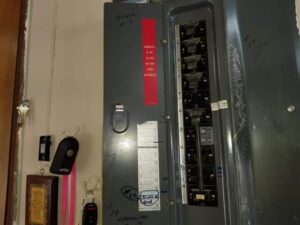
Pushmatic breakers are older and may stick or fail to trip. A breaker that fails to trip can allow wires to overheat and can pose shock hazards. Inspectors note that these panels are commonly replaced during modern electrical upgrades.
You do not need technical experience to spot potential issues. Look for these warning signs:
If you notice any of these signs, treat it as a safety issue and call a licensed electrician immediately.
Most modern panels are safe. Reliable brands include:
However, even newer panels can have recalls. For example, certain Square D QO plug-on-neutral panels produced between 2020 and 2022 were recalled due to potential loose connections (Schneider Electric / CPSC Recall). Periodic professional inspections are recommended to ensure ongoing safety.
Electrical panels are not just hardware, they are critical safety components. Old or unsafe panels can put your home and family at serious risk. If your panel is one of the older brands like FPE Stab-Lok, Zinsco, Challenger, or Pushmatic, contact a licensed electrician to inspect it and plan an upgrade. A new, modern panel protects your home from fire and electrical hazards, ensures compatibility with today’s appliances, and gives peace of mind that your electrical system is reliable.

© 2026 Paschal Air, Plumbing & Electric. All rights Reserved. ARHVACR: 1448550 . ARPlumb: MP6860 . ARElec: M-11071 . ARContractor: 031664 . TXHVACR: TACLA129951E . TXPlumb: M-44920 . TXElec: TECL38435 . OKHVACR: 068145 . OKPlumb: 082277 . OKElec: 00227101 . Texas Department of Licensing and Regulations, PO Box 12157, Austin TX 78711 (512) 463-6599 . The Texas State Board of Plumbing Examiners, PO Box 4200, Austin TX 78765 (512) 936-5200 . Plumbing: #M-44920 RMP Joshua Gross