Want to save with Paschal? Don’t miss our current offers and specials

Want to save with Paschal? Don’t miss our current offers and specials

Want to save with Paschal? Don’t miss our current offers and specials
Return to Paschal Resource & Education Hub
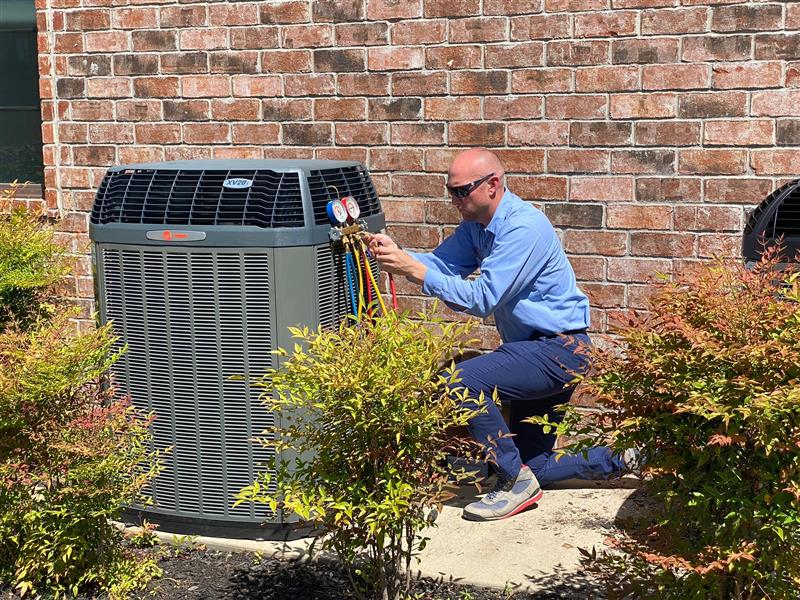
Here is a question worth asking about your own house: are you sure you know where all your air filters are? A homeowner in Shell Knob, MO thought she did. Then our technician Vince pointed out a filter on her lower level that nobody had checked in years, explained which filters she should be buying, and walked her through what MERV ratings actually mean.
Here is the short version. Plenty of homes have more than one air filter, and the forgotten one is usually the one doing the most damage. A clogged filter starves your system of airflow, which costs you comfort, efficiency, and eventually equipment life.
Air filters live at return air openings, and a house can have several. A split level or walkout home like many of the ones around Table Rock often has a return on the lower level that only gets used part of the year. If the previous owner never mentioned it and no technician ever looked, it can sit there for a decade collecting everything the house has to offer.
To find yours, walk the house looking for large vented grilles, typically around 20 inches across, on walls or ceilings. Returns pull air in rather than push it out, so hold a tissue against one while the system is running. If it sticks, that is a return. Pop the grille open and see whether there is a filter behind it.
MERV stands for Minimum Efficiency Reporting Value, and it measures how small a particle a filter can capture. Higher is not automatically better:
The right answer depends on your equipment. A filter that is too restrictive for your blower will reduce airflow, which can freeze a coil in summer and overheat a furnace in winter. That is worth confirming rather than guessing. If cleaner air is the goal, our indoor air quality page covers options that do not choke the system.
Vince came out for a maintenance visit and did more than check boxes. He found the forgotten filter, explained what to buy and why, and mentioned whole-home surge protection, which is a fair thing to bring up in a lake area that takes a beating from storms. She had a new system installed the year before, and nobody had raised it until then.
“He told me about an air filter in my lower level I never knew was there and no one ever checked! He also told me about which filters I should have and about MERV ratings! Also informed me about the whole house surge protection which will be helpful with all the storms at Tablerock.”
– Judy W., Shell Knob, MO
This homeowner is on our Planned Protection Membership, which is how a lot of our customers stay ahead of surprises. Plans start at $8.99 a month for Essential, and SmartGuard is $34.99 a month, which includes a yearly HVAC maintenance visit plus two more visits you can spend on HVAC, plumbing, or electrical, 15% off any repair, priority scheduling, and a $29 service call instead of $89. It also builds $10 a month in Comfort Credits you can put toward a future system, water heater, or panel replacement.
A seasonal AC tune-up with Paschal is $159. If you would rather have someone diagnose a specific problem, an HVAC service call and diagnostic is $89, and that fee is free when you move forward with a same day repair. Whole-home surge protection, which came up on this visit, is priced From $755. You can see the rest of what we handle on our air conditioning services page and our electrical services page.
Yes, and it is common. Systems with multiple return air locations often have a filter grille at each one, and a home with two systems will have at least two. Split level and walkout basement homes frequently have a return on a lower level that gets forgotten.
Look for large vented grilles on walls or ceilings, usually about 20 inches across, that pull air in rather than blow it out. Also check the cabinet at your indoor unit, since some systems hold the filter there instead. Hold a tissue up to a grille: if it sticks, that is a return and it may hold a filter.
For most homes, MERV 8 to 13 is the useful range. MERV 8 handles dust and lint. MERV 11 to 13 catches finer particles including much of what bothers allergy sufferers. Going higher than your system was designed for restricts airflow, which strains the equipment, so it is worth confirming what your system can handle.
A standard one inch filter usually needs changing every one to three months, sooner with pets or during heavy use. Thicker media filters, the four or five inch kind, typically last six months to a year. Check them rather than relying only on the calendar.
Yes. Paschal Air, Plumbing & Electric serves Shell Knob, Branson, and the surrounding Table Rock Lake communities. Check your city on our service areas page, or see what we offer in Shell Knob.
If it has been a while since anyone looked at your whole system, a maintenance visit is a cheap way to find out what you have been missing. Schedule with Paschal Air, Plumbing & Electric and get a straight assessment and an upfront price. Call 417-695-4972 or request service online.
Pricing note: This story was published in July 2026. Starting prices, promotions, and market ranges change over time and may no longer be current. Contact Paschal for an up-to-date, upfront quote for your home.


© 2026 Paschal Air, Plumbing & Electric. All rights Reserved. ARHVACR: 1448550 . ARPlumb: MP6860 . ARElec: M-11071 . ARContractor: 031664 . TXHVACR: TACLA129951E . TXPlumb: M-44920 . TXElec: TECL38435 . OKHVACR: 068145 . OKPlumb: 082277 . OKElec: 00227101 . Texas Department of Licensing and Regulations, PO Box 12157, Austin TX 78711 (512) 463-6599 . The Texas State Board of Plumbing Examiners, PO Box 4200, Austin TX 78765 (512) 936-5200 . Plumbing: #M-44920 RMP Joshua Gross