Want to save with Paschal? Don’t miss our current offers and specials

Want to save with Paschal? Don’t miss our current offers and specials

Want to save with Paschal? Don’t miss our current offers and specials
Return to Paschal Resource & Education Hub
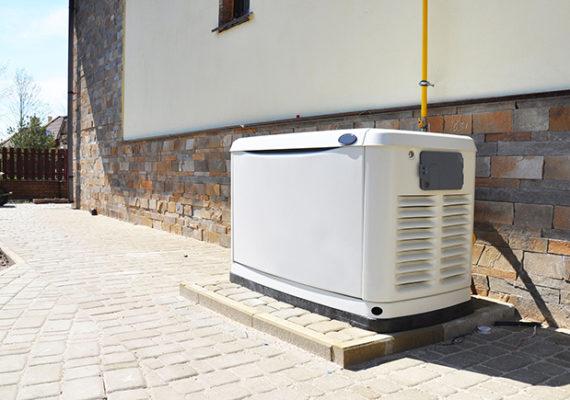
If your standby generator won’t start, the most common causes are a weak or dead battery, the controller not being in AUTO mode, low oil triggering a safety shutdown, a closed fuel valve or low propane, a tripped generator breaker, or an active fault code that needs to be cleared. Start by checking the display for an alarm message and confirming the unit is set to AUTO. This guide walks through each cause in order, what you can safely check yourself, and when it’s time to call a Paschal Pro.
Your generator’s controller is the best clue you have. Before you touch anything else, open the lid and look at the display.
This is the number one cause by a wide margin. The battery cranks the engine and powers the controller, and most generator batteries only last about three to five years. Heat, cold, and long stretches between outages all shorten that life. A battery that tests fine in summer can fail on the first cold morning. If the display is dim, blank, or showing a low battery warning, the battery is the likely problem.
It happens more than you’d think, especially after service work, a storm, or a curious visitor pressing buttons. In any mode other than AUTO, the generator won’t respond to an outage. Switch it back to AUTO and confirm the display shows it ready.
Standby engines have a low oil pressure safety that stops the engine, or keeps it from starting, to prevent serious damage. Generators burn a little oil as they run, so a unit that ran for days during a long outage may simply need oil. Check the dipstick with the unit off and cooled down.
No fuel, no start. On natural gas units, a closed shutoff valve or a problem with the gas meter can starve the engine. On propane units, a low tank is the usual suspect, and very cold weather can reduce the pressure a nearly empty tank delivers. Confirm the fuel valve is open and, for propane, check your tank gauge.
The generator has its own main breaker. If it tripped during the last run or an exercise cycle, the generator may start but won’t send power to the house, which looks just like a failure. Check the breaker on the generator and the breakers in your transfer switch.
If the engine turned over repeatedly without firing, the controller locks out further attempts and shows an overcrank alarm. The root cause is usually fuel, a spark plug, or a battery that’s too weak to crank at full speed. Clearing the alarm without fixing the cause just repeats the cycle.
Like any engine, a standby generator needs spark to run. Fouled or worn plugs make starting harder over time, and ignition components can fail. Plugs are replaced as part of routine maintenance for exactly this reason.
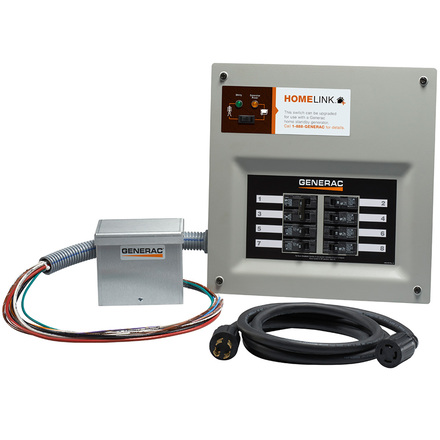
The automatic transfer switch senses the outage and signals the generator to start, then moves your home’s circuits over to generator power. If the switch or its wiring has a problem, the generator may never get the start signal. This one needs a licensed electrician.
Mice and insects love a quiet, sheltered generator cabinet, and chewed wires are a common and frustrating find. Leaves and debris can block air intakes, and standing water or flooding can damage components. Keep the area around the unit clear.
Stop there. Generators produce electricity at the same voltage as your home’s service, and the transfer switch connects directly to your electrical panel. Don’t open electrical compartments, bypass safety shutdowns, or repeatedly reset alarms.
Call for service if the fault code keeps coming back, the battery is more than a few years old, the engine cranks but won’t fire, you smell fuel, or the generator starts but your home doesn’t get power. A trained technician can test the battery and charger, check fuel pressure, inspect the ignition and transfer switch, and clear the fault properly. Schedule generator repair online and our team will get your backup power working again.
Almost every no-start call traces back to maintenance. An annual service visit that includes a battery test, oil and filter change, spark plug check, and a look at the transfer switch catches the most common failures before the next storm. If you’re considering a new or larger system, our guide on what size generator you need is a good place to start, and you can compare brands in our Generac vs. Kohler breakdown.
The most common reasons are a dead or weak battery, the controller not set to AUTO, a low oil shutdown, a closed fuel valve or low propane, or an active fault code. Check the display for an alarm message first.
Most standby generator batteries last about three to five years. Extreme heat and cold shorten that, which is why the battery should be tested at every annual service.
You can clear a simple alarm and return the unit to AUTO by following the manufacturer’s instructions. If the same fault returns, stop resetting it and have the cause diagnosed, since repeated attempts can damage the engine.
Usually a tripped generator breaker or a problem with the automatic transfer switch. Check the generator’s breaker first. Transfer switch problems require a licensed electrician.
At least once a year, and after any long outage where the generator ran for extended hours. Service typically includes an oil and filter change, battery test, spark plug check, and a transfer switch inspection.


© 2026 Paschal Air, Plumbing & Electric. All rights Reserved. ARHVACR: 1448550 . ARPlumb: MP6860 . ARElec: M-11071 . ARContractor: 031664 . TXHVACR: TACLA129951E . TXPlumb: M-44920 . TXElec: TECL38435 . OKHVACR: 068145 . OKPlumb: 082277 . OKElec: 00227101 . Texas Department of Licensing and Regulations, PO Box 12157, Austin TX 78711 (512) 463-6599 . The Texas State Board of Plumbing Examiners, PO Box 4200, Austin TX 78765 (512) 936-5200 . Plumbing: #M-44920 RMP Joshua Gross