Want to save with Paschal? Don’t miss our current offers and specials

Want to save with Paschal? Don’t miss our current offers and specials

Want to save with Paschal? Don’t miss our current offers and specials
Return to Paschal Resource & Education Hub
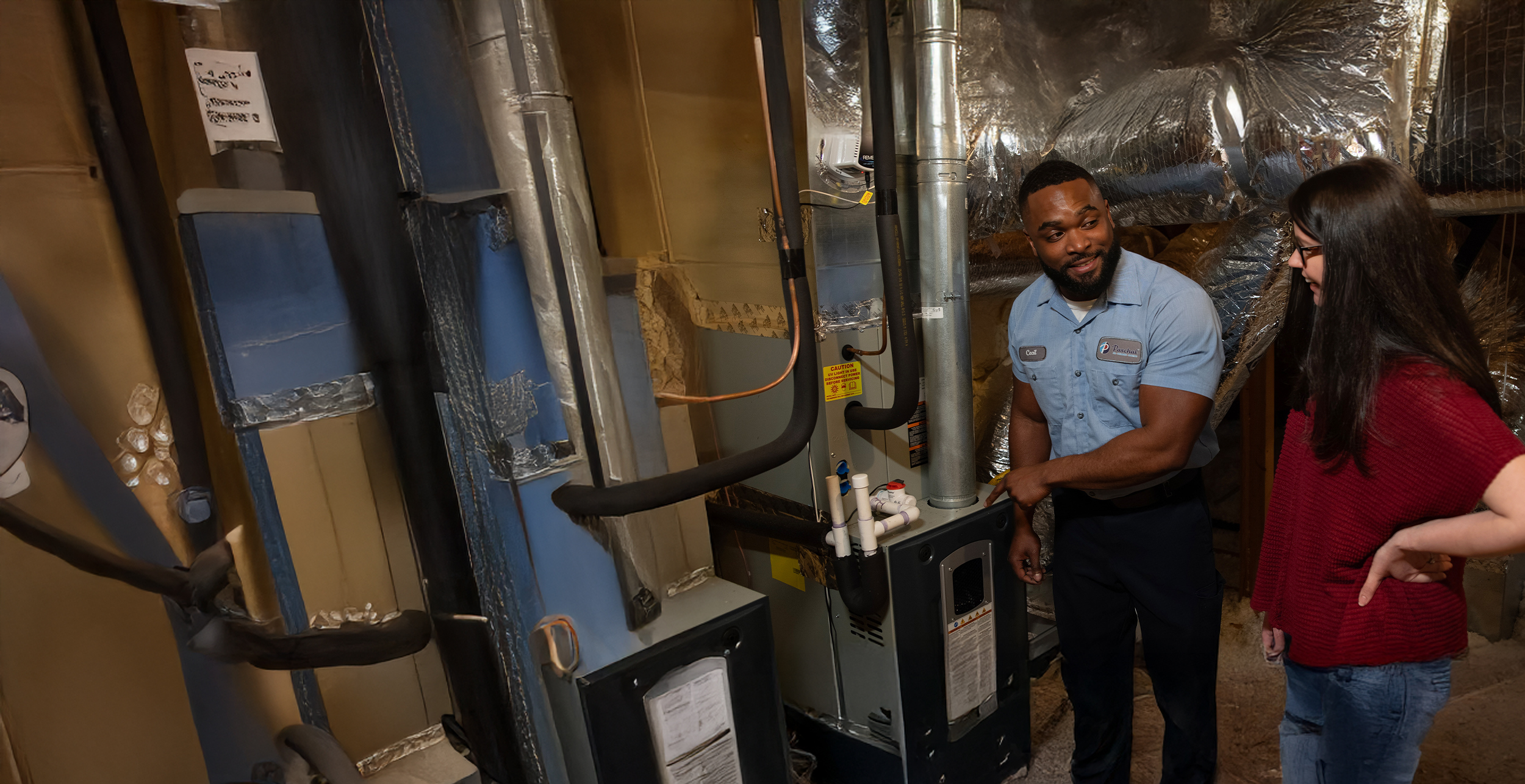
If your furnace keeps turning on and off every few minutes, it’s short cycling, and the most common causes are a clogged air filter that makes the furnace overheat, a dirty flame sensor that shuts the burners off, a thermostat problem, or a furnace that’s too large for your home. Start by replacing the filter and checking the thermostat. If the problem keeps happening, it’s worth a service call, because short cycling wastes energy, puts strain on parts until they fail prematurely, and in some cases points to a safety issue. Here’s what causes it, what you can check yourself, and when to call a Paschal Pro.
A healthy furnace runs in steady cycles, usually several minutes at a time, until your home reaches the thermostat setting. Short cycling is when the furnace starts, runs for only a minute or two, shuts off, and then starts again shortly after, over and over. The house may never feel fully warm, some rooms stay cold, and you’ll often hear the system clicking on and off far more than usual.
It tends to show up in fall, the first time the heat runs after sitting idle all summer. Dust, a filter that wasn’t changed, and parts that have been sitting unused all come to light at once.
A lot of short cycling problems have simple causes that homeowners can check in a few minutes before calling a technician.
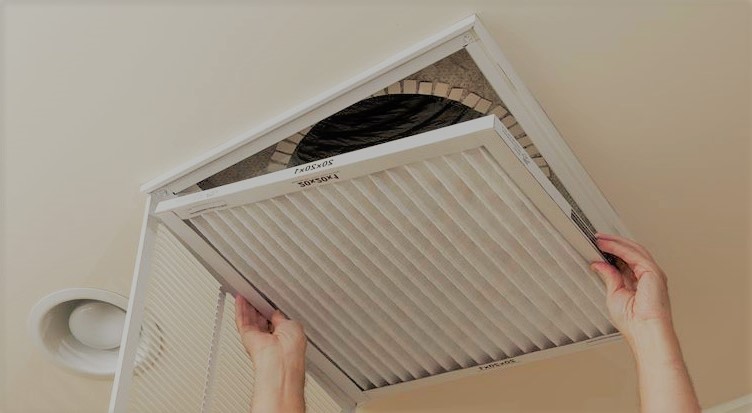
When the filter is packed with dust, not enough air moves across the heat exchanger. Heat builds up inside the furnace, and a safety device called the high-limit switch shuts the burners off to protect the equipment. Once it cools down, the furnace starts again, overheats again, and the cycle repeats. A fresh filter often fixes it on the spot.
The flame sensor confirms that the burners actually lit. When it gets coated with residue over time, it can’t detect the flame reliably, so the furnace shuts off the gas a few seconds after lighting as a safety measure, then tries again. If your furnace lights, runs for a moment, and shuts off, a faulty or dirty flame sensor is a prime suspect. Cleaning or replacing it is a quick job for a technician, and it’s one of the most common issues we find on fall service calls.
A thermostat mounted in the wrong spot, like near a supply vent, in direct sun, or by a kitchen, can read the temperature wrong and shut the system off too early. Weak batteries, loose wiring, or incorrect settings on older models cause the same problem.
A furnace that’s too large for your home heats the space so fast that it satisfies the thermostat in minutes, then shuts off, before the air has a chance to circulate evenly. You end up with hot and cold spots, extra wear, and higher bills. Proper sizing comes from a load calculation, not square footage alone.
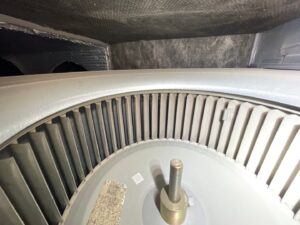
Closed or blocked vents, undersized return air, crushed ducts, or a dirty blower wheel all reduce airflow and push the furnace toward overheating. Our guide to HVAC blower wheels explains why that part matters so much.
Modern furnaces use a pressure switch to confirm that exhaust gases are venting safely. If the flue or intake pipe is blocked by debris, a bird’s nest, or ice, or the inducer motor is failing, the furnace will shut itself down. This is a safety shutdown, and it shouldn’t be ignored.
This is less common, but it’s the one that matters most. A cracked heat exchanger can cause overheating and short cycling, and it can allow carbon monoxide to escape. If your furnace is older and you notice short cycling along with soot, a changed burner flame, or unusual odors, turn it off and have it inspected right away.
Often it’s just inefficient and hard on the equipment, but it can be a warning sign. Short cycling caused by overheating, venting problems, or a cracked heat exchanger can create real safety risks, including carbon monoxide. Make sure you have working carbon monoxide detectors on every level of your home, and if an alarm sounds, leave the house and call your gas utility or 911. If you ever smell gas, read how to tell if gas is leaking from your furnace.
Short cycling rarely fixes itself. Whatever is causing it keeps doing damage every time the furnace starts and stops, so the sooner you diagnose the root cause, the less it costs you.
Call for service if a new filter and a thermostat check don’t stop the cycling, if the furnace lights and shuts off within seconds, if you see error codes on the control board, or if you notice soot, odors, or a carbon monoxide alarm. Our technicians diagnose the problem at its root. They can clean or replace a faulty flame sensor, check the high-limit and pressure switches, inspect the heat exchanger and venting, and confirm your furnace is sized correctly. Schedule heating repair online and we’ll get your heat running the way it should.
Most of these problems show up during an annual heating inspection before they ever cause a breakdown. A fall heating maintenance visit includes cleaning the flame sensor, checking safety switches, testing airflow, and inspecting the heat exchanger. Paschal’s Planned Protection Membership includes up to two system checks a year, so your furnace gets looked at before the cold arrives. If your furnace is blowing cool air instead of cycling, see why a furnace isn’t blowing warm air.
The most common causes are a clogged air filter that makes the furnace overheat, a dirty flame sensor, a thermostat problem, or an oversized furnace. Replace the filter and check the thermostat first. If the cycling continues, have the system inspected.
It can be. Short cycling from overheating, blocked venting, or a cracked heat exchanger can create safety risks, including carbon monoxide. Keep working CO detectors in your home and have the furnace inspected if the problem continues.
Yes. A clogged filter restricts airflow, the furnace overheats, and the high-limit switch shuts it off. It’s the most common and least expensive cause to fix.
In cold weather, a properly sized furnace typically runs for several minutes per cycle, and a few cycles an hour is normal. Cycles lasting only a minute or two, repeated constantly, point to short cycling.
Yes. A thermostat near a heat source or supply vent, weak batteries, or loose wiring can shut the furnace off too early. Moving or replacing the thermostat often solves it.


© 2026 Paschal Air, Plumbing & Electric. All rights Reserved. ARHVACR: 1448550 . ARPlumb: MP6860 . ARElec: M-11071 . ARContractor: 031664 . TXHVACR: TACLA129951E . TXPlumb: M-44920 . TXElec: TECL38435 . OKHVACR: 068145 . OKPlumb: 082277 . OKElec: 00227101 . Texas Department of Licensing and Regulations, PO Box 12157, Austin TX 78711 (512) 463-6599 . The Texas State Board of Plumbing Examiners, PO Box 4200, Austin TX 78765 (512) 936-5200 . Plumbing: #M-44920 RMP Joshua Gross