Want to save with Paschal? Don’t miss our current offers and specials

Want to save with Paschal? Don’t miss our current offers and specials

Want to save with Paschal? Don’t miss our current offers and specials
Return to Paschal Resource & Education Hub
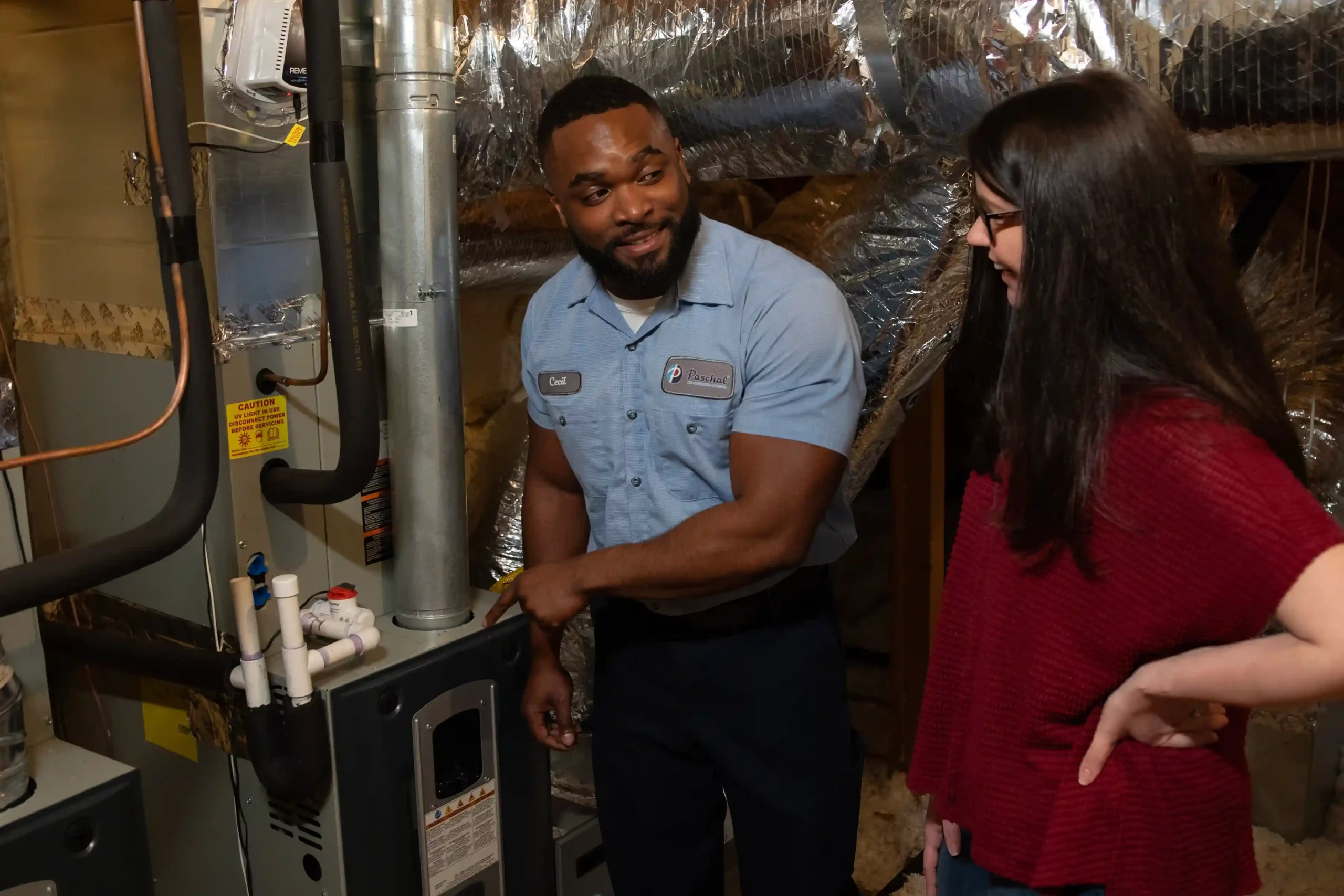
If your furnace is getting older and you’re wondering how much life it has left, you’re asking the right question before the cold sets in. Most gas furnaces last about 15 to 20 years, and electric furnaces often last 20 years or more, but the real lifespan depends on how well the system was installed, how often it was maintained, and how hard it has to work each winter. Here’s what affects furnace lifespan, the signs yours is wearing out, and how to decide between one more repair and a replacement.
A well-maintained gas furnace typically lasts 15 to 20 years, and some run longer. Electric furnaces have fewer moving parts and no combustion, so 20 to 30 years is common. If your system is a heat pump paired with a furnace or air handler, plan on roughly 10 to 15 years for the heat pump itself, since it runs year-round for both heating and cooling.
Those numbers are averages, not guarantees. Two furnaces of the same brand and age can be in very different shape depending on how they’ve been treated.
| System type | Typical lifespan |
|---|---|
| Gas furnace | 15 to 20 years |
| Electric furnace | 20 to 30 years |
| Heat pump | 10 to 15 years |
Maintenance, installation quality, and airflow have the biggest impact on furnace lifespan. A furnace that gets a yearly tune-up, clean filters, and proper airflow runs cooler and starts fewer times, which keeps parts like the heat exchanger, igniter, and blower motor from wearing out early.
A yearly heating inspection catches small problems, like a dirty flame sensor or a weak igniter, before they turn into breakdowns or put stress on bigger parts. It’s also when a technician checks the heat exchanger and safety controls. Here’s what a tune-up actually includes and whether it’s worth it.
A clogged filter makes the furnace overheat, and repeated overheating is one of the fastest ways to shorten its life. Most homes need a new filter every one to three months during heating season. See how often to change your filter for your setup.
A furnace that’s too big for your home heats the space in short bursts, turning on and off far more than it should. One that’s too small runs almost nonstop. Either way, parts wear out faster. Proper sizing comes from a load calculation, not square footage alone.
Leaky, crushed, or undersized ducts and closed vents make the blower work harder and trap heat inside the furnace. Good airflow keeps the system running the way it was designed.
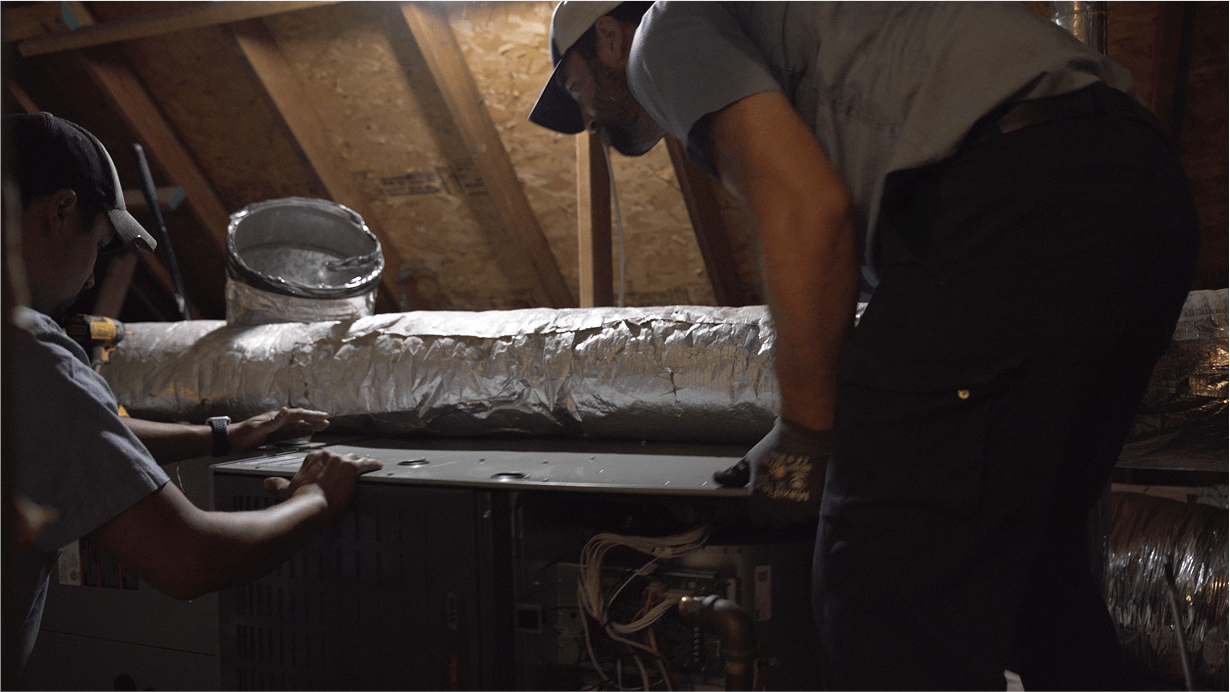
The clearest signs a furnace is wearing out are age past 15 years, repairs that keep coming back, rising heating bills, and uneven heat from room to room. Any one of these is worth watching. Two or three together usually mean it’s time to start planning for a replacement.
If you smell gas or a carbon monoxide alarm sounds, leave the house and call your gas utility or 911. Read more about carbon monoxide warning signs.
A simple rule of thumb helps: multiply the furnace’s age by the repair cost. If the number is over $5,000, replacement usually makes more financial sense than repairing. Age matters too. A furnace under 10 years old is usually worth repairing, while one past 15 often isn’t, especially if the heat exchanger is cracked.
A few other things to weigh:
Our guide to repairing or replacing a furnace goes deeper on the decision. If you already have a replacement quote and want a second opinion, Paschal’s Free Price Check is a no-strings way to compare.
The best ways to extend furnace life are a yearly tune-up, regular filter changes, and fixing small problems before they grow. These habits keep the system running cooler and cleaner, which protects the expensive parts.
Paschal’s Planned Protection Membership includes a yearly HVAC maintenance visit and priority scheduling, so your furnace gets checked every year without you having to remember.
If your furnace is past 15 years, has needed more than one repair recently, or just isn’t keeping your home as warm as it used to, a Paschal Pro can inspect it and tell you plainly how much life it has left. You’ll get up-front pricing and clear options, whether that’s a repair, a tune-up, or a new system. Schedule heating repair or learn more about furnace installation online. For signs of a specific problem, see why a furnace blows cold air or why a gas furnace won’t ignite.
Most gas furnaces last about 15 to 20 years, and electric furnaces often last 20 to 30 years. Regular maintenance, clean filters, and correct sizing help a furnace reach the upper end of that range.
Usually not, unless the repair is small and inexpensive. At 20 years, a furnace is past its typical lifespan, less efficient than newer models, and likely to need more repairs soon. Multiply the age by the repair cost, and if it’s over $5,000, replacement is usually the better value.
It depends on the furnace size, efficiency level, fuel type, and whether ductwork or venting needs updates. A Paschal Pro can give you up-front pricing on a few options before any work begins, and financing is available.
If it’s past 15 years and showing signs of wear, planning ahead is usually smart. You get time to compare options and schedule the install, instead of making a rushed decision during a cold snap.
A real tune-up is worth it. It’s when a technician cleans the flame sensor, checks safety controls, tests airflow, and inspects the heat exchanger, which catches problems early and helps the furnace last longer. Many manufacturers also require regular maintenance to keep the warranty valid.
Look for the data plate inside the furnace’s access door. The manufacture date is often listed directly, or it’s built into the serial number. A technician can also tell you during a service visit.


© 2026 Paschal Air, Plumbing & Electric. All rights Reserved. ARHVACR: 1448550 . ARPlumb: MP6860 . ARElec: M-11071 . ARContractor: 031664 . TXHVACR: TACLA129951E . TXPlumb: M-44920 . TXElec: TECL38435 . OKHVACR: 068145 . OKPlumb: 082277 . OKElec: 00227101 . Texas Department of Licensing and Regulations, PO Box 12157, Austin TX 78711 (512) 463-6599 . The Texas State Board of Plumbing Examiners, PO Box 4200, Austin TX 78765 (512) 936-5200 . Plumbing: #M-44920 RMP Joshua Gross