Want to save with Paschal? Don’t miss our current offers and specials

Want to save with Paschal? Don’t miss our current offers and specials

Want to save with Paschal? Don’t miss our current offers and specials
Return to Paschal Resource & Education Hub
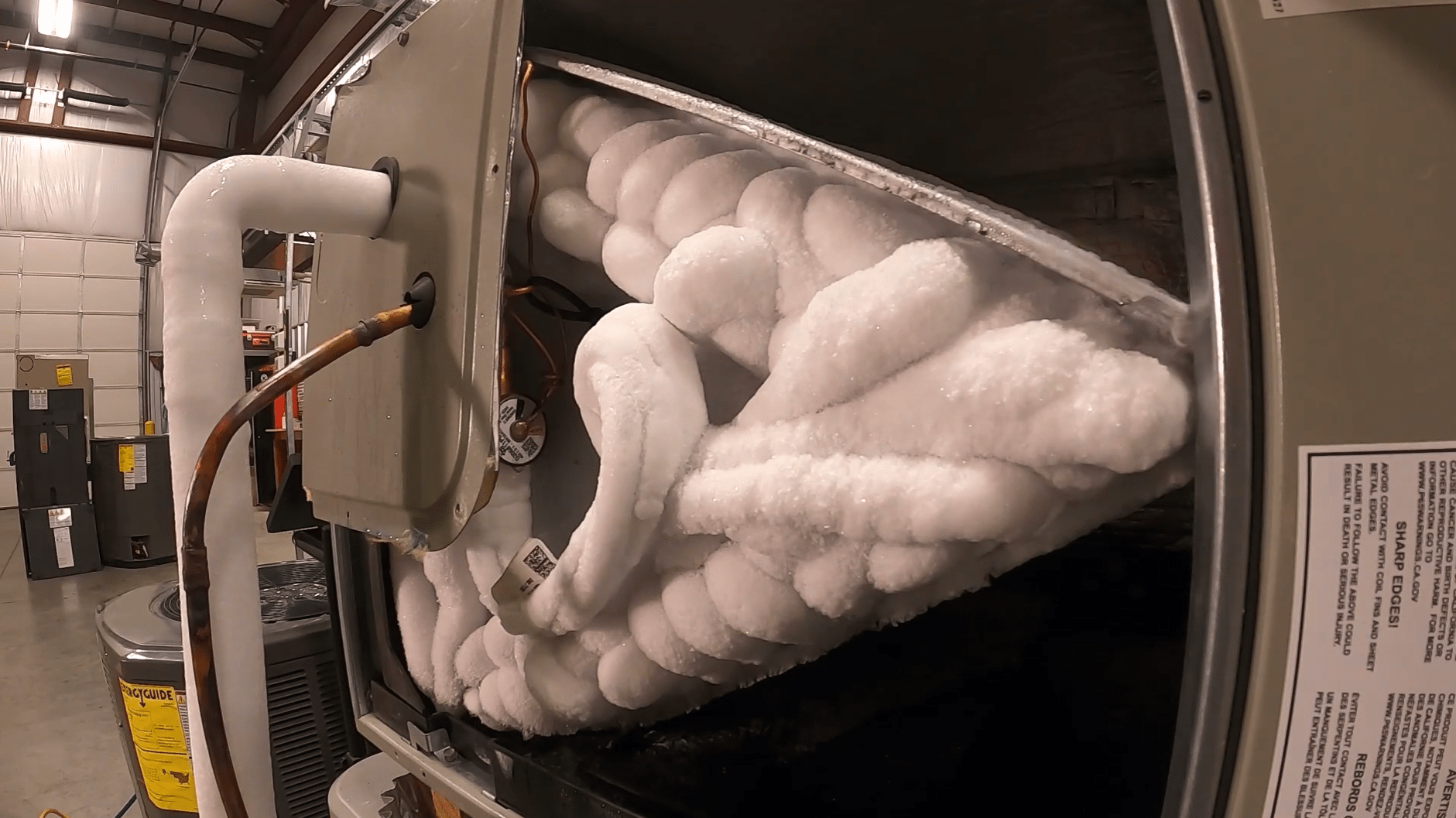
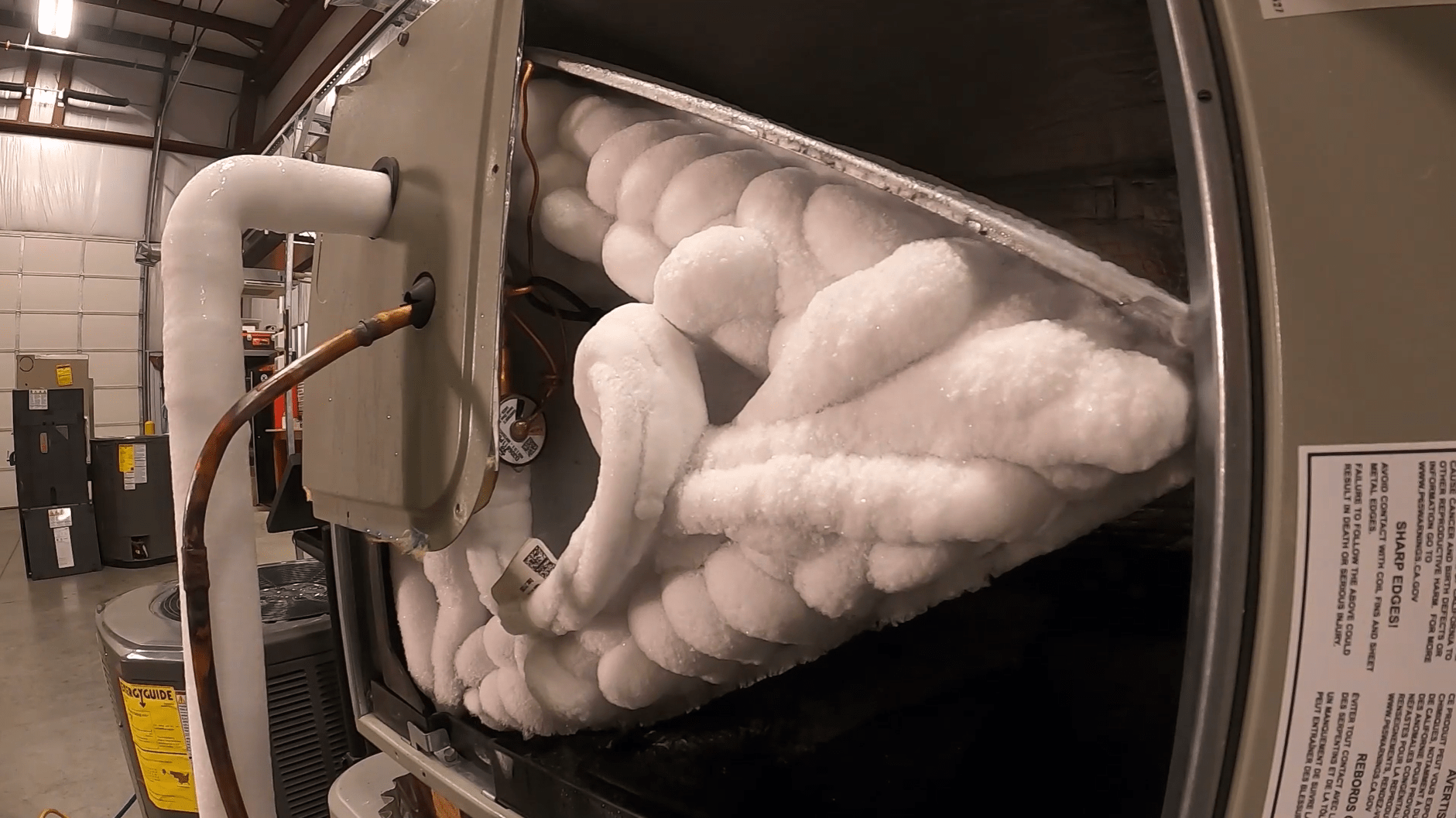
Here’s a problem you likely never thought you would experience: Ice on your HVAC in the middle of the summer heat. Don’t worry, though, it’s much more common than you think! Very cold refrigerant coils + moisture in the air = frozen AC unit. As a homeowner, having a comfortable, temperature-controlled home is crucial for your overall well-being, especially during the scorching summer months. That’s why a frozen air conditioner is more than just an inconvenience—it’s a serious problem that needs swift attention.
When you’re running your AC unit more often and at colder temperatures, like you do in the middle of summer, they’re more likely to freeze up. If you notice something wrong with your AC, especially visible ice, it’s time to take action. We’re here to help you get the problem solved. A “frozen air conditioner” may sound like an oxymoron, but it’s a common problem that can occur due to various issues. When we say an air conditioner is “frozen,” we mean that ice has formed on the evaporator coil, a critical component that absorbs heat from the air in your home.
When functioning correctly, the coil gets cold but does not freeze. However, when airflow is reduced or the refrigerant levels are too low, the coil can get too cold, causing the moisture in the surrounding air to freeze onto the coil.
Other than visible ice on any part of your HVAC unit, the next most obvious sign of a frozen AC unit is a lack of cool air. If you put your hand in front of your supply vents and you sense warm air coming out, you probably have ice somewhere in the system.
You may also notice a hissing sound coming from the unit. If that’s the case, take steps immediately to prevent further damage. Your wallet will thank you later.
Your air conditioner might take anywhere from an hour to more than a day to completely defrost. A frozen air conditioner happens when moisture on the evaporator coil turns to ice. Many systems need about 3–4 hours for the coils to thaw completely, though some units can take longer. It’s important to catch it early to prevent further damage to your unit—and, of course, so you’re without cool air for the shortest amount of time possible.
Ice blocks the heat exchange process and can reduce cooling. Here’s your step-by-step defrosting guide.
Even if it’s sweltering outside, turn off the AC immediately if you notice a frozen air conditioner. A frozen air conditioner occurs when moisture on the evaporator coil turns to ice. Running a frozen air conditioner will wear out parts much faster, and could overheat your unit. Continuing to run it can worsen ice buildup, ice blocks the heat exchange process in air conditioners, and it can strain the cooling system. Worn parts are bad news for the most expensive piece of your HVAC unit—the compressor. To avoid lasting damage and a hefty bill, turn your air conditioner thermostat located inside from COOL to OFF and allow 3-4 hours for the coils to thaw completely. This will start the defrosting process.
If freezing occurs, shut off the air conditioning unit right away. Turning the HVAC fan to ON will force it to blow warm air over any frozen coils, which will speed up the defrost process. Make sure it’s actually set to ON and not to AUTO, since switching the thermostat fan to ON changes the fan settings from AUTO to continuous run. Continuous air flow helps ice melt faster during the thawing process. Automatic settings cause the fan to cycle, starting and stopping over and over again. You want continuous, non-stop airflow over the frozen areas. There is an option on your indoor thermostat to do this.
Now it’s time for some investigative work. What caused your air conditioner to freeze up in the first place? There are a few common culprits:
Clogged-up air filters or a dirty filter can cause restricted airflow and blocked airflow through the air conditioning unit. Proper airflow lets the evaporator coil absorb heat, but poor airflow can lead to ice buildup, and ice reduces cooling by blocking airflow further, sometimes causing a drastic drop in airflow. Check for dirty air filters and replace dirty air filters every 30-90 days, depending on conditions, to help prevent freezing.
If your coils are pretty dirty, the same process always occurs. Dirt, dust, debris, and grime covering the evaporator coils causes massive air restriction the same way dust will in your air filter. The evaporator coil is the indoor coil inside the air handler. Dirty air conditioner coils reduce airflow through the hvac system, and neglected ac coils can lead to frozen evaporator coils. A dirty evaporator coil often starts with a neglected filter and may need professional cleaning if the freezing persists.
If you spot refrigerant leaks anywhere, that’s probably going to be the main cause of your ice problem, and ice may also form on nearby refrigerant lines. Low refrigerant levels cause pressure drops, allowing moisture in the air to freeze around your HVAC coils. Low refrigerant can also lead to ac freezing or frozen ac coils by making the evaporator coil too cold.
Despite what many homeowners may think, refrigerant doesn’t simply get “used up.” It doesn’t decrease over time, and it doesn’t evaporate during AC use. So if you’re low on refrigerant, there’s absolutely no doubt you have a leak.
Note: Refrigerant is an extremely hazardous chemical that should only be handled by licensed professionals. If you think you have a leak, seek professional assistance from an HVAC professional or HVAC technician for diagnosis and repair.
A collapsed duct, a malfunctioning blower fan, or closed valves might be causing your air conditioner to freeze. This kind of low airflow can keep the system from functioning correctly and may be why the ac unit freezes. A faulty thermostat, broken thermostat, or faulty or broken thermostat can also cause air conditioner freezing by letting the system run too long. Air conditioner units are very complex machines with a lot of other pieces and parts. Our Northwest Arkansas, Fort Smith River Valley & Southwest Missouri HVAC pros can help diagnose these less obvious problems.
Once your air conditioner unit has thawed completely and the coils are dry, you can turn your A/C back on. If future freezing occurs, monitor for continued problems over the next several hours to a few days.
Prevention is always better than a cure. Here are some preventive measures you can take to avoid dealing with a frozen air conditioner:
Keeping your air filter clean is one of the most critical steps in preventing your AC unit from freezing. Replace or clean it regularly according to the manufacturer’s instructions to support proper maintenance, better indoor air quality, and proper airflow, and replacing filters on time can also help prevent future freezing.
Scheduling annual maintenance with an HVAC technician can help detect any potential issues before they become significant problems. A professional technician can inspect the evaporator coil, condenser coil, outdoor coil, and outdoor unit to confirm the system is functioning correctly and ensure it’s operating at peak efficiency.
Improper installation of your AC unit can lead to various problems, including a freeze-up. Running the air conditioning unit in cold outdoor temperatures, especially below 60°F, can also trigger freezing. Use a programmable thermostat to avoid extreme temperature swings that contribute to ice forming. Make sure a professional installs your unit to prevent such issues.
While you can take some steps to address a frozen air conditioner, like cleaning or replacing the air filter and ensuring vents, return vents, and supply registers are unobstructed to help prevent low airflow, you should call a professional if these actions do not resolve the issue. If the problem returns after thawing the system and replacing the filter, seek professional assistance.
While a frozen air conditioner is not directly dangerous, it can lead to other issues like water damage due to the melting ice. Additionally, the added strain on your AC unit can cause parts to wear out faster, which could potentially lead to more significant issues.


© 2026 Paschal Air, Plumbing & Electric. All rights Reserved. ARHVACR: 1448550 . ARPlumb: MP6860 . ARElec: M-11071 . ARContractor: 031664 . TXHVACR: TACLA129951E . TXPlumb: M-44920 . TXElec: TECL38435 . OKHVACR: 068145 . OKPlumb: 082277 . OKElec: 00227101 . Texas Department of Licensing and Regulations, PO Box 12157, Austin TX 78711 (512) 463-6599 . The Texas State Board of Plumbing Examiners, PO Box 4200, Austin TX 78765 (512) 936-5200 . Plumbing: #M-44920 RMP Joshua Gross